

Chef’s Overview
Dear Chefs, there’s a kind of calm that shows up when a knife stops rocking and starts dropping straight through an ingredient. Straight-down cutting isn’t flashy, but it’s efficient, controlled, and easier on your body than most people expect. In this post, we’re digging into how Nakiri knives support straight-down cutting motion, why that geometry matters so much for vegetables, and how the right steel and blade design quietly change your entire prep flow.

When Rocking Stops Making Sense
Rocking cuts are often taught first because they feel dynamic and familiar. But when you’re working through piles of vegetables, that constant arc can become noisy, tiring, and inconsistent. Straight-down cutting removes the swing and replaces it with intention. Nakiri knives are designed specifically for this motion. The flat edge encourages vertical travel, not forward roll. Once you stop forcing a curve into the cut, the knife starts working with gravity instead of against it. This shift echoes a larger idea we’ve talked about in Chef’s Notes before, that efficiency in the kitchen usually comes from simplifying motion, not adding more of it.
Why Nakiri Geometry Favors Vertical Control
The defining feature of a Nakiri knife is its long, flat edge profile. Unlike chef knives or Santokus, there’s very little belly to accommodate rocking. That flatness keeps the entire edge engaged with the board during straight-down cuts. When the blade travels vertically, pressure distributes evenly across the edge. Instead of one point doing most of the work, the whole blade participates. This reduces resistance, keeps cuts consistent, and limits the need for wrist compensation. As we discussed in When to Use a Nakiri Knife Instead of a Chef Knife, this geometry isn’t a limitation, it’s a specialization.
How Straight-Down Motion Reduces Fatigue
Vertical cutting minimizes lateral movement. The wrist stays neutral. The forearm stays aligned. Over time, that alignment reduces strain that builds up during repetitive prep. Nakiri knives shine during long vegetable sessions because the blade path stays short and predictable. You’re lifting and dropping, not swinging and correcting. That predictability keeps muscles relaxed and rhythm steady. It’s the same principle we touch on in How to Use a Chef Knife Safely and Efficiently, but applied in a more focused, vegetable-first way.
Why Vegetables Respond Better to Vertical Cuts
Vegetables have structure. Fibers run in specific directions, and straight-down cuts respect that structure. Instead of tearing or bending cells before slicing, the blade separates cleanly. This is especially noticeable with dense produce like carrots, cabbage, squash, and root vegetables. A Nakiri knife doesn’t wedge its way through. It falls through. That clean separation improves texture, presentation, and even cook time consistency. We explored a related outcome in Why Nakiri Knives Create the Most Even Vegetable Cuts, where geometry plays a bigger role than sharpness alone.
How Blade Height Improves Control
Nakiri knives aren’t just flat, they’re tall. That height gives your knuckles clearance and provides a larger surface area for guiding the blade. During straight-down cuts, that extra height improves stability and keeps the knife tracking true. The tall blade also makes it easier to scoop and transfer ingredients, which keeps prep moving smoothly. Less reaching, less resetting, less interruption. All of that supports the rhythm that straight-down cutting thrives on. Knives like the 7" Nakiri Knife are built around this concept, offering a clean, no-frills platform for vertical motion. For cooks who want the same geometry paired with premium steel performance, the 7" VG-10 Damascus Nakiri Knife adds edge retention and responsiveness without changing the cutting behavior.
Why Steel Choice Matters in Vertical Cutting
Straight-down cutting relies on clean edge engagement. If the steel dulls quickly or feels unstable, you’re forced to add pressure. Added pressure breaks the simplicity of the motion. High-quality steels maintain sharpness longer, which keeps vertical cuts effortless. VG-10 steel, in particular, holds a crisp edge that supports repeated downward motion without tearing fibers. That balance between sharpness and stability is something we’ve unpacked before in How VG-10 Steel Balances Edge Retention and Durability, and it becomes especially noticeable in Nakiri-style prep.
How Nakiri Knives Change Your Prep Mindset
Once straight-down cutting clicks, prep feels quieter. The board sounds different. Movements shorten. The knife stops asking questions and starts giving answers. You begin organizing ingredients vertically instead of spatially. Cuts become uniform without conscious effort. That mental shift is one reason many cooks reach for a Nakiri when vegetables dominate the menu. It’s not just about the knife, it’s about how it trains your hands to move with less waste.
How Pro Chefly Approaches Nakiri Design
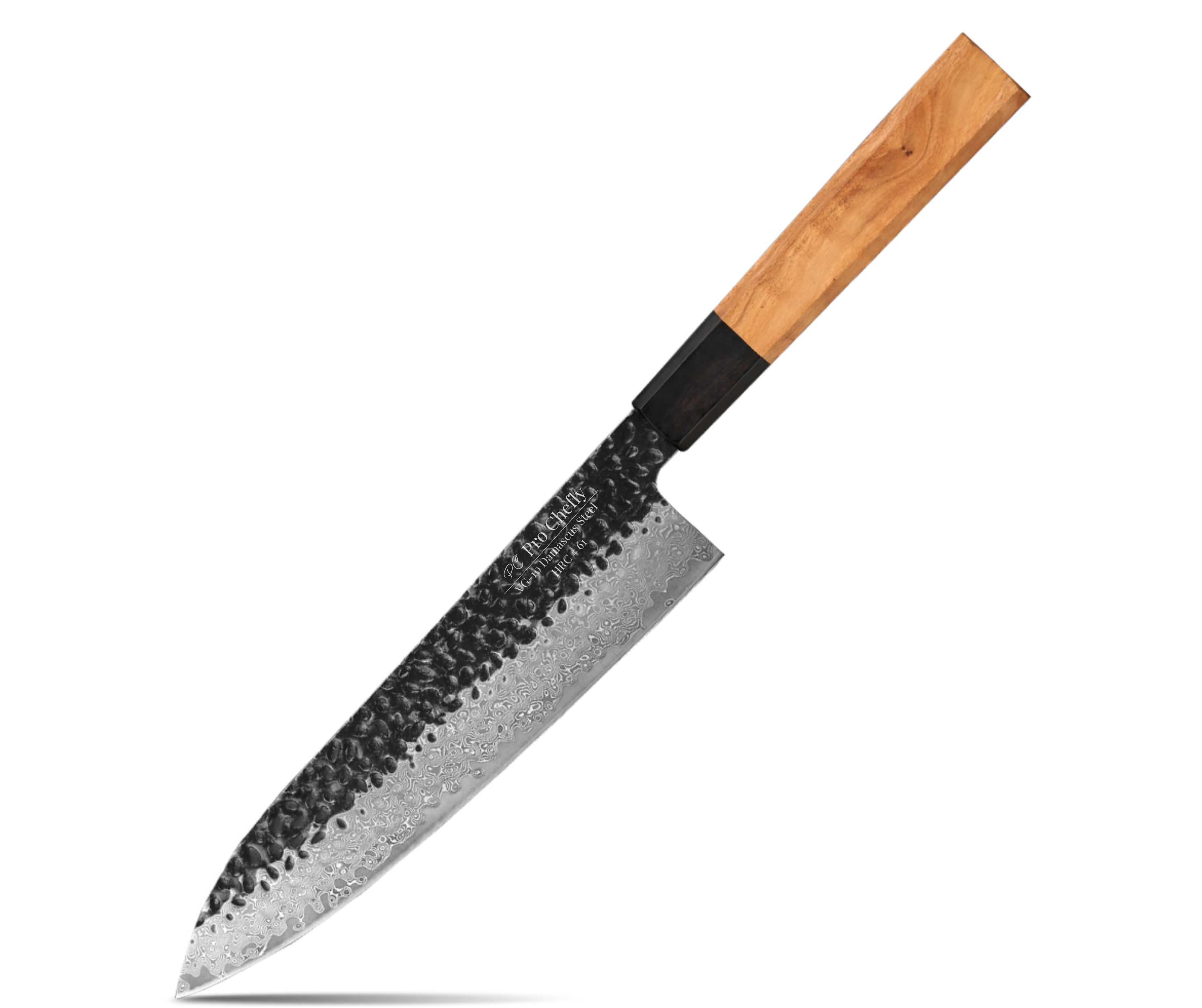
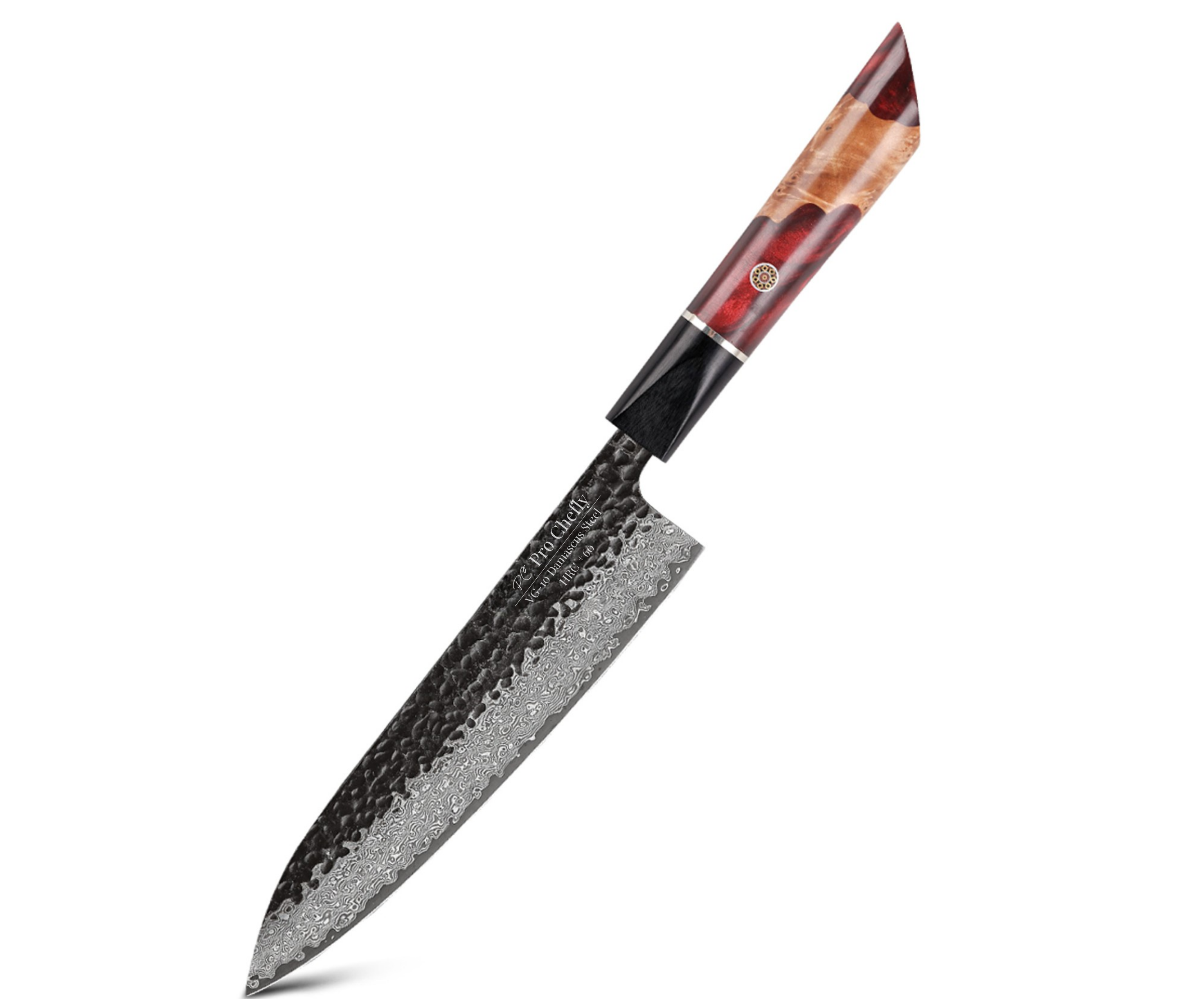
At Pro Chefly, we see Nakiri knives as discipline tools. They encourage correct motion by removing unnecessary options. That’s why we focus on flat profiles, balanced height, and steels that reward light pressure. Using a Nakiri alongside something like the 8" VG-10 Damascus Chef Knife gives cooks flexibility without overlap. One blade handles vertical vegetable prep with ease, the other steps in when tasks demand versatility. This pairing reflects the broader philosophy we share in What to Look for in a Professional-Grade Chef Knife, where purpose defines performance.
Straight-Down Cutting Is About Trust
Vertical motion works best when you trust the blade. Trust that it will engage cleanly. Trust that it will stay sharp. Trust that it won’t fight your hand. Nakiri knives earn that trust by staying honest. They don’t pretend to be everything. They do one thing extremely well. Once you experience that clarity, straight-down cutting stops feeling restrictive and starts feeling freeing.
Letting the Knife Fall Is the Real Skill
Straight-down cutting isn’t passive. It’s controlled release. You guide the blade, then let gravity finish the job. Nakiri knives support that partnership better than almost any other vegetable blade. When the knife falls true, prep becomes smoother, faster, and easier on your body. And that’s when cooking starts to feel less like work and more like rhythm.
Knife Collections
Shop the latest in Pro Chefly Damascus Knives






Chef's Notes
Stay up to date with the latest kitchen stories and recipes

- March 25, 2026
Dear Chefs, this is one of those dishes that feels like it belongs next to the ocean, even if you’re...

- March 23, 2026
Dear Chefs, this is the kind of spring dish that wakes up your entire kitchen the moment it hits the...

- March 19, 2026
Dear Chefs, some dinners don’t whisper, they walk into the kitchen with confidence and a little swagger. Surf and Turf...

- March 17, 2026
Dear Chefs, there’s something satisfying about a dish that feels wholesome, bright, and quietly comforting all at the same time....

- March 13, 2026
Dear Chefs, there is something about cooking whole fish that feels both elegant and surprisingly simple once you understand the...

- March 11, 2026
Dear Chefs, spring cooking always pulls me toward dishes that feel light, bright, and quietly luxurious without trying too hard....
- Choosing a selection results in a full page refresh.
- Opens in a new window.