

Chef’s Overview
Dear Chefs, the belly of a chef knife is that gentle curve running along the edge from heel to tip, and it quietly dictates the entire rhythm of how you cut. Most home cooks never think about it, yet it is the difference between a smooth rocking motion that feels like second nature and a stiff, choppy stroke that fights you the whole way. At Pro Chefly we obsess over blade geometry because a knife’s belly shape decides whether you rock, push, or glide through your ingredients. A pronounced curve invites a fluid rocking tempo, while a flatter edge asks for cleaner up-and-down chops, and neither is wrong, they are simply different dances. Understanding your knife’s belly is the fastest way to stop wrestling your board and start moving with real cutting rhythm.

The Day We Finally Understood the Curve of a Blade
Early in the Pro Chefly story, one of us spent an entire prep shift blaming a dull edge for a clumsy, stuttering mince, only to discover the knife was razor sharp the whole time. The real culprit was the rhythm, or rather the mismatch between the blade’s deep belly and a flat chopping motion that ignored the curve entirely. The moment we stopped lifting the whole knife off the board and instead let the tip stay planted while the heel rocked up and down, a pile of parsley turned to fine confetti in seconds. It felt like finding a hidden gear in a car we had been driving in first the entire time. Ever since, we have paid close attention to how a blade wants to move, because a good knife is almost always trying to teach you its natural tempo if you slow down enough to listen.
What Belly Shape Actually Means on a Kitchen Blade
Belly refers to the curvature of the cutting edge, and it varies dramatically from one style of blade to the next. A classic Western chef knife carries a generous, sweeping belly that arcs upward toward the tip, while many Japanese-style blades run flatter with only a subtle rise near the point. That single design choice ripples through everything, from how the edge meets the board to how much of the blade is actually cutting at any given moment. Once you can see the curve, you can predict how a knife will behave before you ever make a single cut.
The Rock and Glide of a Curved Belly
A deep belly is built for rocking, where the tip stays in contact with the board while the rest of the blade pivots through the food in a smooth arc. This is why a well-curved chef knife feels so natural for mincing garlic, herbs, and shallots, since the motion keeps the edge moving without ever fully leaving the surface. The curve also lets you cut with momentum, rolling forward through dense vegetables rather than pressing straight down and stalling. Cooks raised in Western kitchens tend to love this feel because it turns repetitive prep into an almost meditative sway, and if you want to sharpen that rocking motion into real speed, we walked through the technique in How to Master Speed and Control with a Chef Knife.
Why a Flatter Profile Changes the Motion
A flatter edge trades that rocking sway for clean, decisive up-and-down chops that meet the board in full contact. Blades like the nakiri lean hard into this style, which is why they excel at slicing vegetables into precise, even pieces without the partial cuts a deep curve can leave behind. The rhythm here is more staccato than legato, a series of confident straight-down strokes rather than one continuous roll. Neither approach is superior, but they reward completely different muscle memory, and we broke down exactly when to reach for each in When to Use a Nakiri Knife Instead of a Chef Knife.
Matching Belly Shape to the Way You Cook
Knowing the theory is nice, but the real payoff comes when you match a blade’s belly to the tasks you do most. If your evenings revolve around mincing aromatics, breaking down proteins, and juggling varied prep, a curved belly will feel like an extension of your hand. If your kitchen runs on mountains of vegetables and you crave uniform pieces, a flatter edge will serve you far better. The grip matters just as much as the blade, since holding the knife correctly is what lets the belly do its job, which is something we covered in How to Hold a Chef Knife Correctly for Maximum Precision.
For Rocking, Mincing, and Everyday Speed
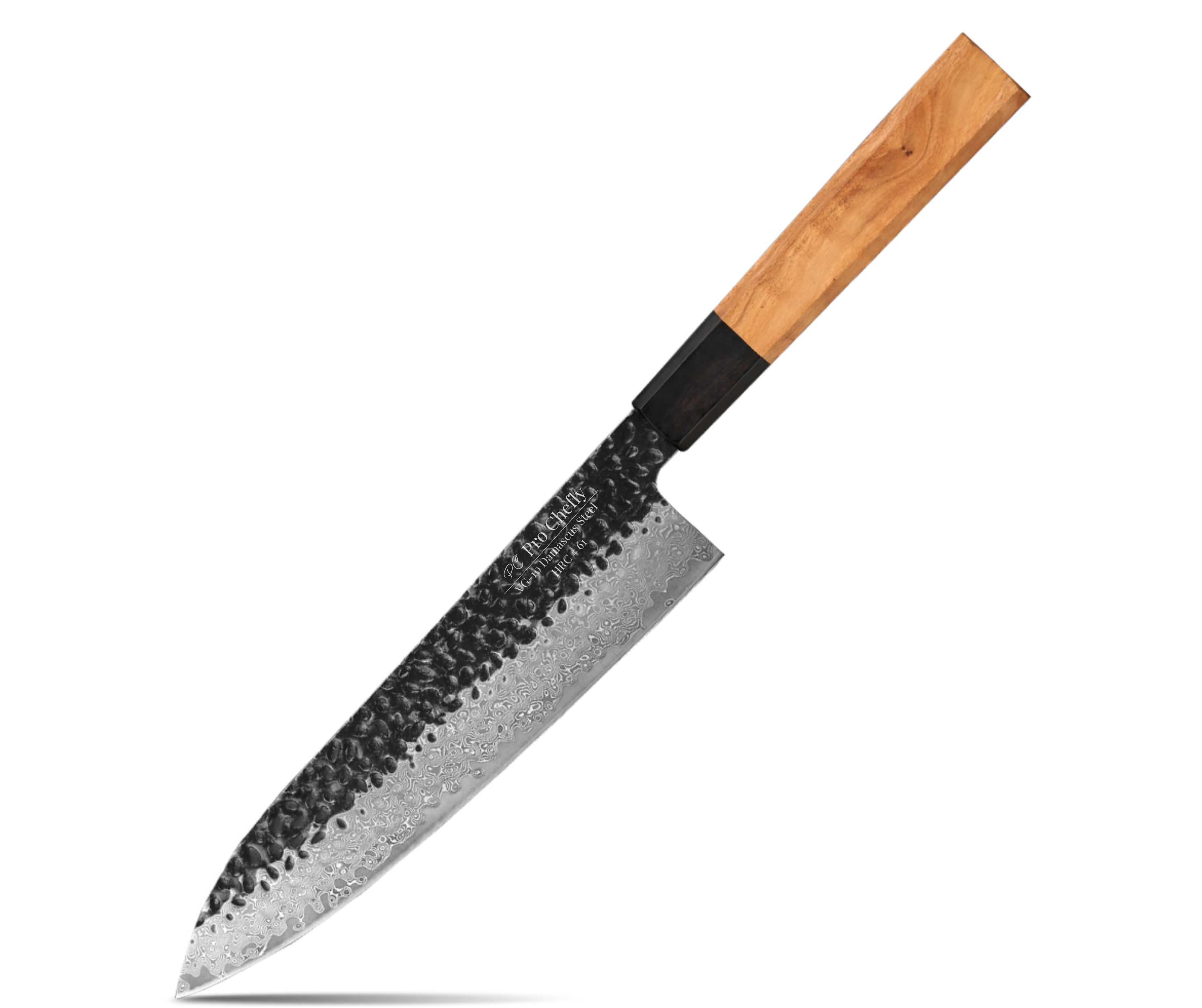
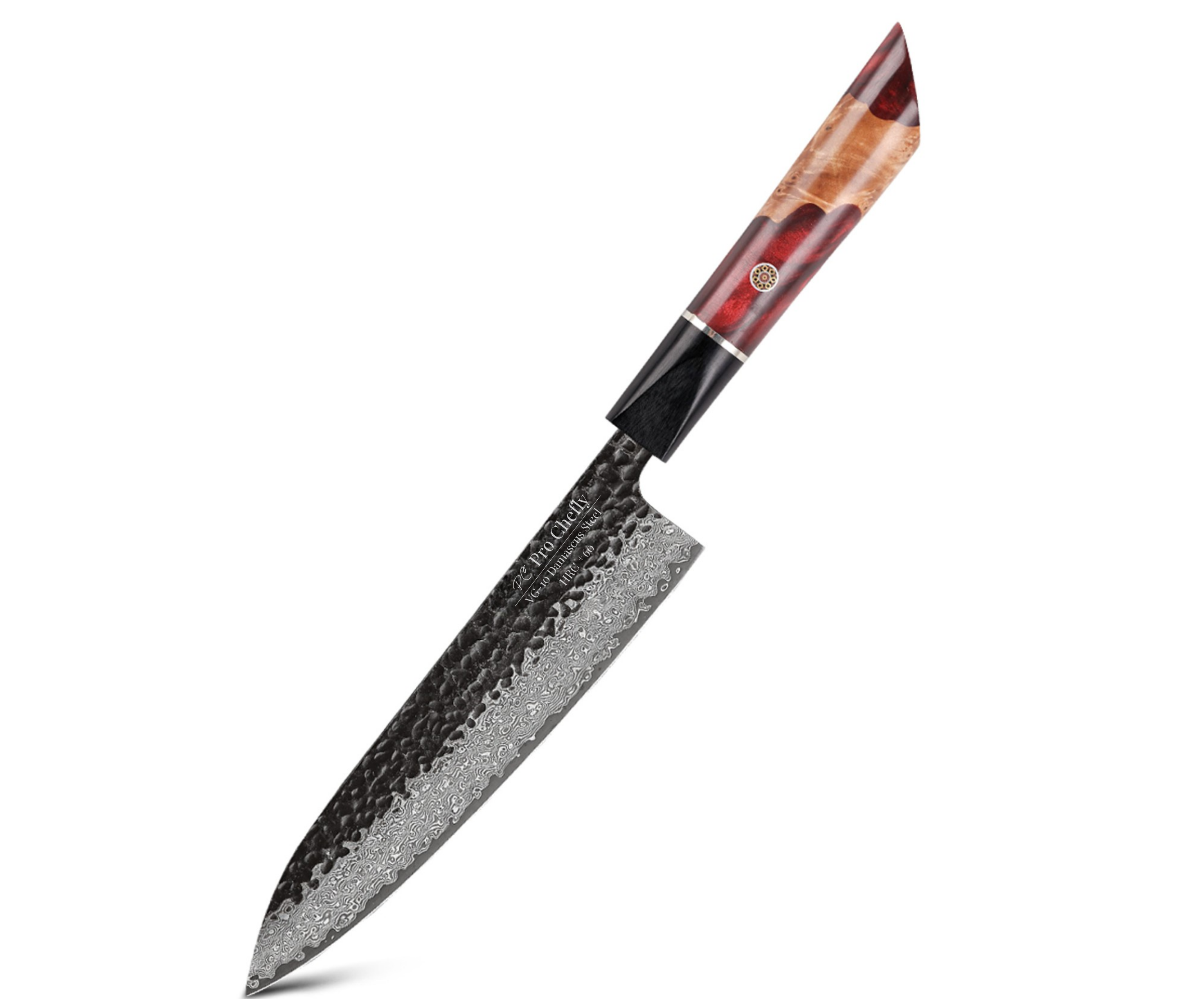
When your prep leans on rhythm and versatility, a well-bellied blade is the workhorse you want on the board. Our 8" Damascus Chef Knife carries a balanced curve that rocks through herbs and glides across onions with equal ease, which makes it the blade we reach for when the ticket list gets long. Its weight and belly work together so the knife almost falls into the rocking motion on its own, saving your wrist over a long session. This is exactly the kind of do-everything reliability we celebrated in Why the Chef Knife Is the Backbone of Every Pro Kitchen.
For Push Cuts and Vegetable Precision
When your rhythm shifts to clean, straight-down cuts, a flatter blade rewards you with speed and consistency. The 7" Damascus Nakiri Knife keeps its edge nearly straight from heel to tip, so every chop lands with full contact and leaves no trailing threads on dense produce. That flat profile turns a heap of summer vegetables into uniform pieces faster than you might expect. Swapping between a curved and a flat blade depending on the task is not indecision, it is simply cooking with the right tool for the tempo in front of you.
Let the Blade’s Curve Set Your Tempo
The next time a mince feels clumsy or a slice feels like a wrestling match, resist the urge to blame your sharpening stone and take a good look at the curve in your hand. Your knife has a preferred rhythm written right into its edge, and the fastest way to level up your prep is to stop fighting that shape and start flowing with it. Rock with the curved bellies, chop clean with the flat ones, and let each blade set the tempo it was built to keep. Once the motion finally clicks, you will wonder how you ever cooked while working against the knife instead of alongside it.
Knife Collections
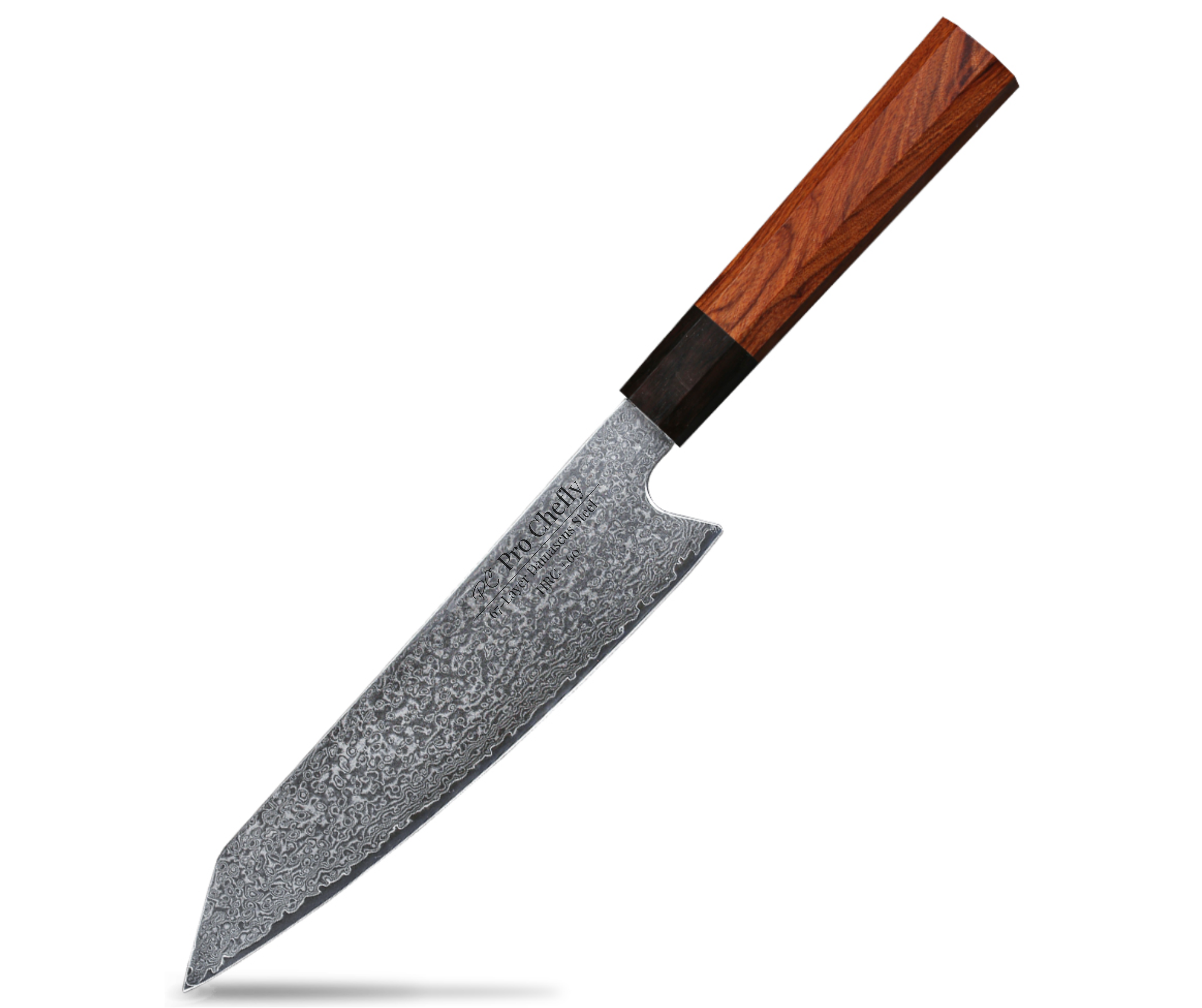
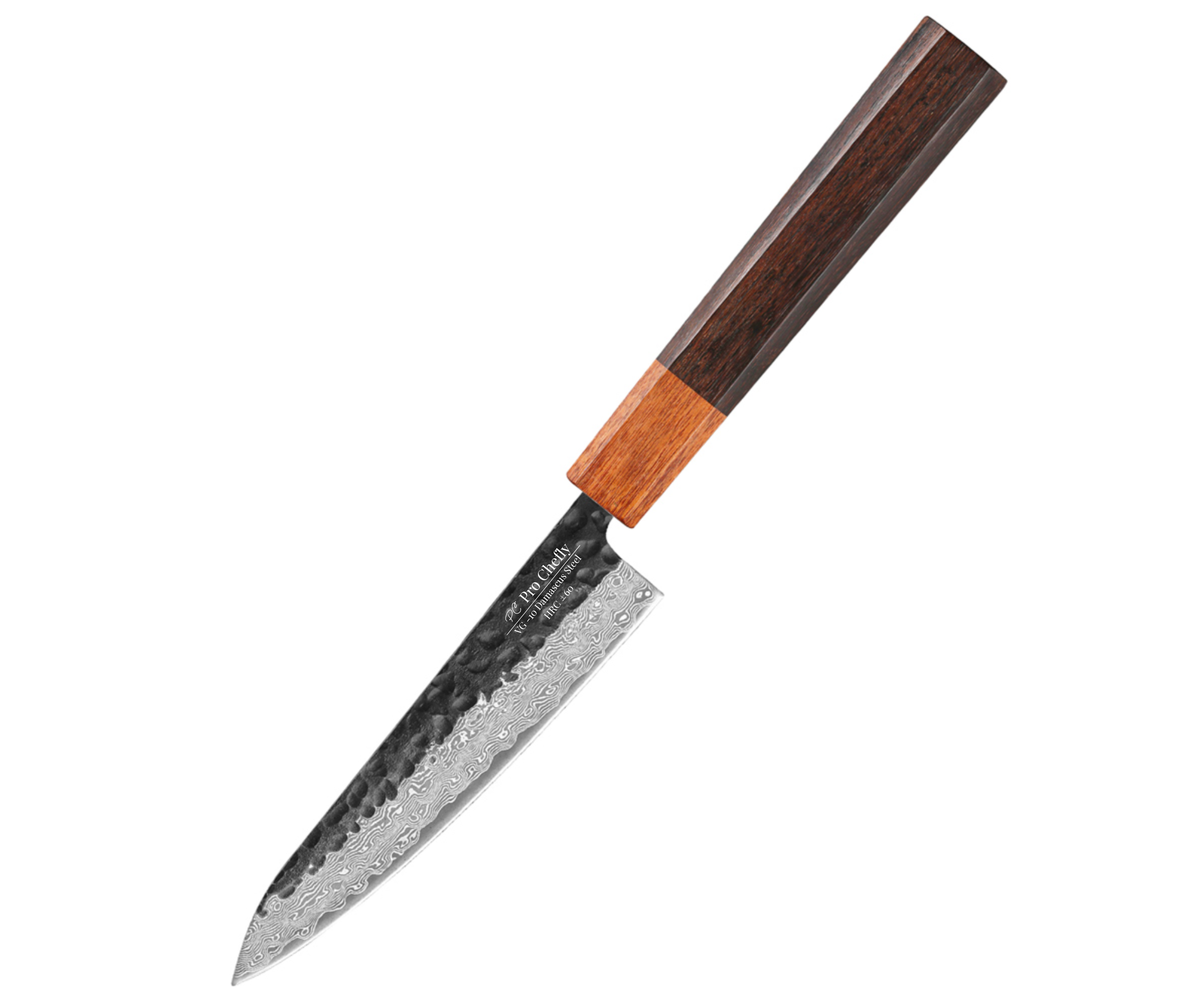
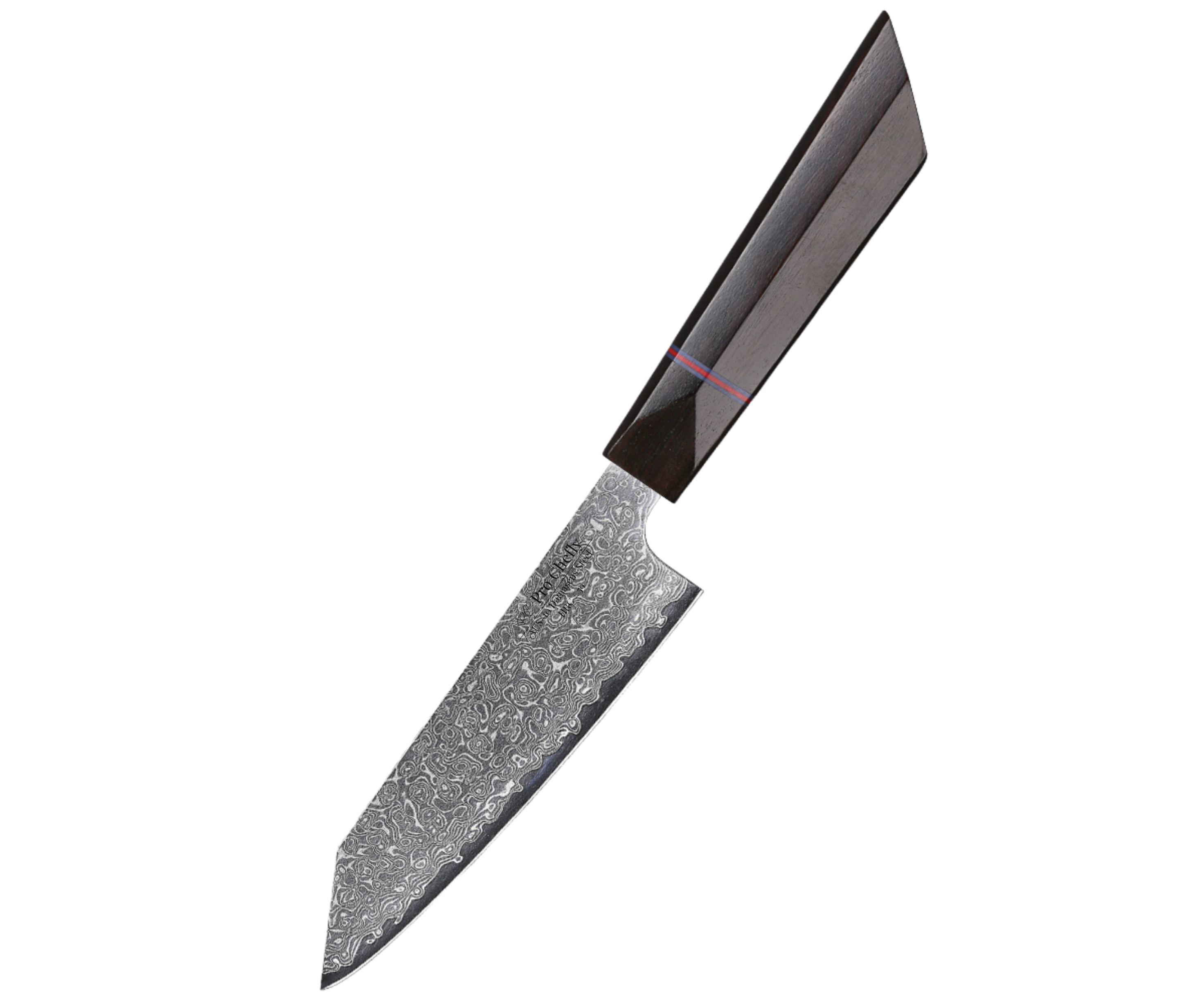
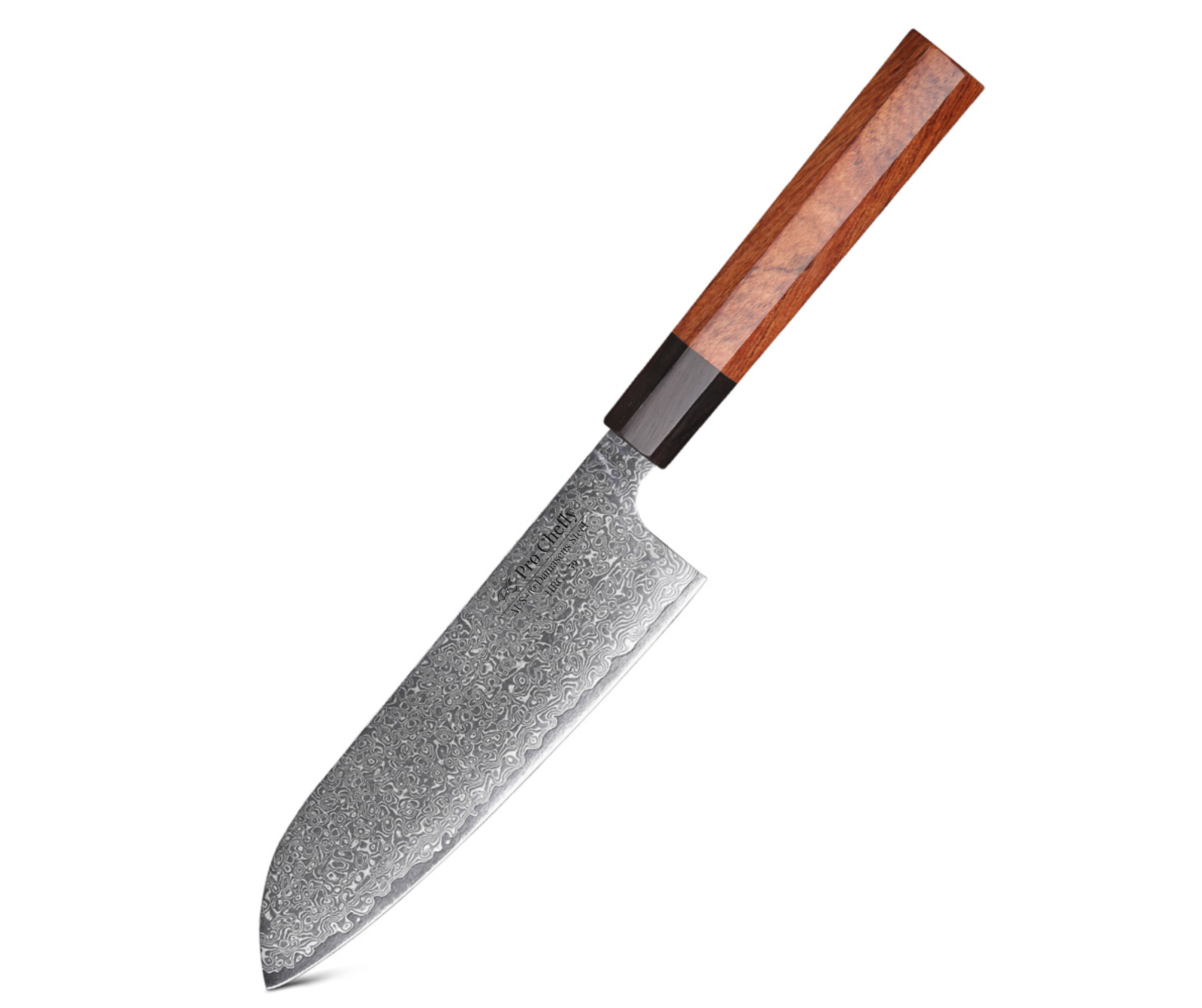
Shop the latest in Pro Chefly Damascus Knives






Chef's Notes
Stay up to date with the latest kitchen stories and recipes

- March 25, 2026
Dear Chefs, this is one of those dishes that feels like it belongs next to the ocean, even if you’re...

- March 23, 2026
Dear Chefs, this is the kind of spring dish that wakes up your entire kitchen the moment it hits the...

- March 19, 2026
Dear Chefs, some dinners don’t whisper, they walk into the kitchen with confidence and a little swagger. Surf and Turf...

- March 17, 2026
Dear Chefs, there’s something satisfying about a dish that feels wholesome, bright, and quietly comforting all at the same time....

- March 13, 2026
Dear Chefs, there is something about cooking whole fish that feels both elegant and surprisingly simple once you understand the...

- March 11, 2026
Dear Chefs, spring cooking always pulls me toward dishes that feel light, bright, and quietly luxurious without trying too hard....
- Choosing a selection results in a full page refresh.
- Opens in a new window.