

Chef’s Overview
Dear Chefs, ask any knife nerd about AUS-10 versus VG-10 and the conversation usually stops at edge retention, but the real story shows up the moment you put steel to stone. These two premium Japanese steels are close cousins, yet they give your hands completely different feedback while sharpening, from how quickly a burr forms to how the edge sings against the grit. At Pro Chefly we think understanding that feedback is what separates someone who owns a nice knife from someone who truly knows it. AUS-10 tends to feel a touch more forgiving and communicative, while VG-10 can feel harder and more precise, and neither is better, just different to work with. Learn to read those signals and your sharpening sessions stop being a chore and start becoming a conversation with the blade.

The First Time Two Blades Felt Different on the Stone
One quiet afternoon in the Pro Chefly workshop, we lined up an AUS-10 blade and a VG-10 blade on the same whetstone just to settle a friendly argument. We expected the difference to be subtle, maybe even imaginary, but within a few strokes the contrast was impossible to ignore. The AUS-10 raised a burr quickly and gave off a slightly softer, grabbier feel, almost as if it wanted to cooperate with us. The VG-10 stayed quieter and firmer under our fingertips, demanding a lighter touch and a bit more patience before the edge came screaming back to life. That afternoon taught us that spec sheets only tell half the story, and the other half lives in the feedback your hands pick up while you work.
What Sets AUS-10 and VG-10 Apart in the Steel Itself
Before you can understand why they feel different, it helps to know what these steels actually are underneath the beautiful Damascus cladding. Both are high-carbon stainless steels prized in Japanese knife making, and both take a wickedly sharp edge, which is why they show up so often in premium kitchens. The differences are small on paper but meaningful in the hand, rooted in their exact recipe of carbon and alloying elements. We compared their broader performance side by side in How Does VG-10 Compare to AUS-10 and Other Premium Steels, but here we care specifically about what happens on the stone.
The Composition Behind the Feel
VG-10 is built around a high carbon content with added cobalt and vanadium, which contributes to its fine grain and its reputation for a crisp, hard edge. AUS-10 carries a similar carbon level but a slightly different alloy balance, giving it a marginally tougher and more forgiving character. Those small chemistry differences are exactly why one steel can feel firm and glassy while the other feels a hair softer and grippier under your hand. If you want a deeper primer on why Japanese makers reach for VG-10 so often, we told its whole story in What is VG-10 Steel and Why Do Japanese Knives Use It.
Hardness, Grain, and How the Edge Forms
Hardness plays a starring role in how a steel responds to sharpening, and even a point or two on the Rockwell scale changes the entire experience. Harder steel like VG-10 tends to resist the stone a bit more, forming a finer and more delicate burr that requires a careful, deliberate hand. Slightly softer steel like AUS-10 gives up its burr more readily, which can make it feel friendlier and more approachable for newer sharpeners. We unpacked how those numbers translate into real edge behavior in How Rockwell Hardness Affects Sharpness and Edge Retention, and it is worth a read before your next session.
Reading the Feedback While You Sharpen
All of this theory becomes genuinely useful the instant you settle in at your stone and start paying attention. Sharpening is a feedback loop, and the steel is constantly telling you how much pressure to use, when the burr has formed, and when it is time to stop. Once you can read those cues, you will sharpen faster, ruin far fewer edges, and actually start to enjoy the process. The fundamentals of angle, pressure, and progression stay the same no matter the steel, and we laid them out step by step in How to Properly Sharpen and Maintain a Chef Knife at Home.
How AUS-10 Talks Back on the Stone
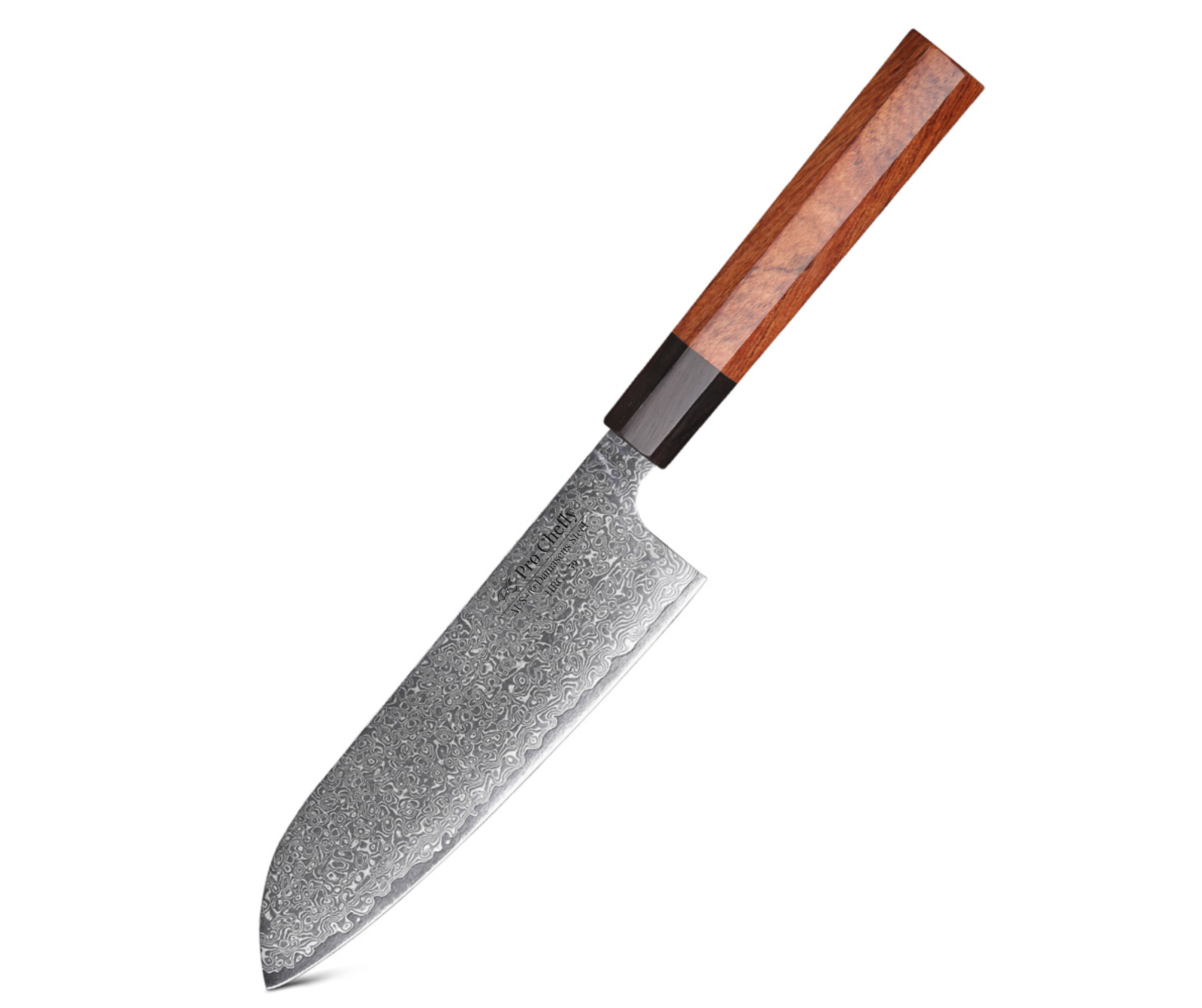
AUS-10 tends to feel communicative and a little grabbier, so the burr appears quickly and you can feel it catch on your fingertip after fewer strokes. That forgiving nature makes it a wonderful steel to learn on, since mistakes are easier to correct and the edge comes right back without a fuss. Our 7" Damascus Santoku Knife is a joy to maintain for exactly this reason, rewarding steady, honest strokes with a keen and dependable edge. If you are newer to whetstones, this kind of responsive steel builds your confidence remarkably fast.
What VG-10 Feels Like Under Your Hands
VG-10 asks for a lighter touch and a bit more patience, then rewards you with an exceptionally fine, long-lasting edge once you dial it in. The feedback is quieter and smoother, so you learn to trust subtle changes rather than an obvious, dragging pull. Our 8" Damascus Chef Knife showcases that precise, glassy character, holding its edge through long prep sessions before it ever asks to visit the stone again. Once you adapt to its firmer feel, sharpening VG-10 becomes deeply satisfying in its own controlled way.
Let Your Hands Learn the Steel
The more you sharpen, the more you realize a knife is not just a shape but a personality you slowly get to know. AUS-10 and VG-10 will both hand you a beautiful edge, but they get there by speaking to your hands in slightly different languages. Spend real time with each, notice how the burr forms and how the steel resists, and soon you will be able to identify a blade by feel alone. That quiet fluency is the true reward, the moment sharpening stops being maintenance and becomes a skill you genuinely look forward to.
Knife Collections
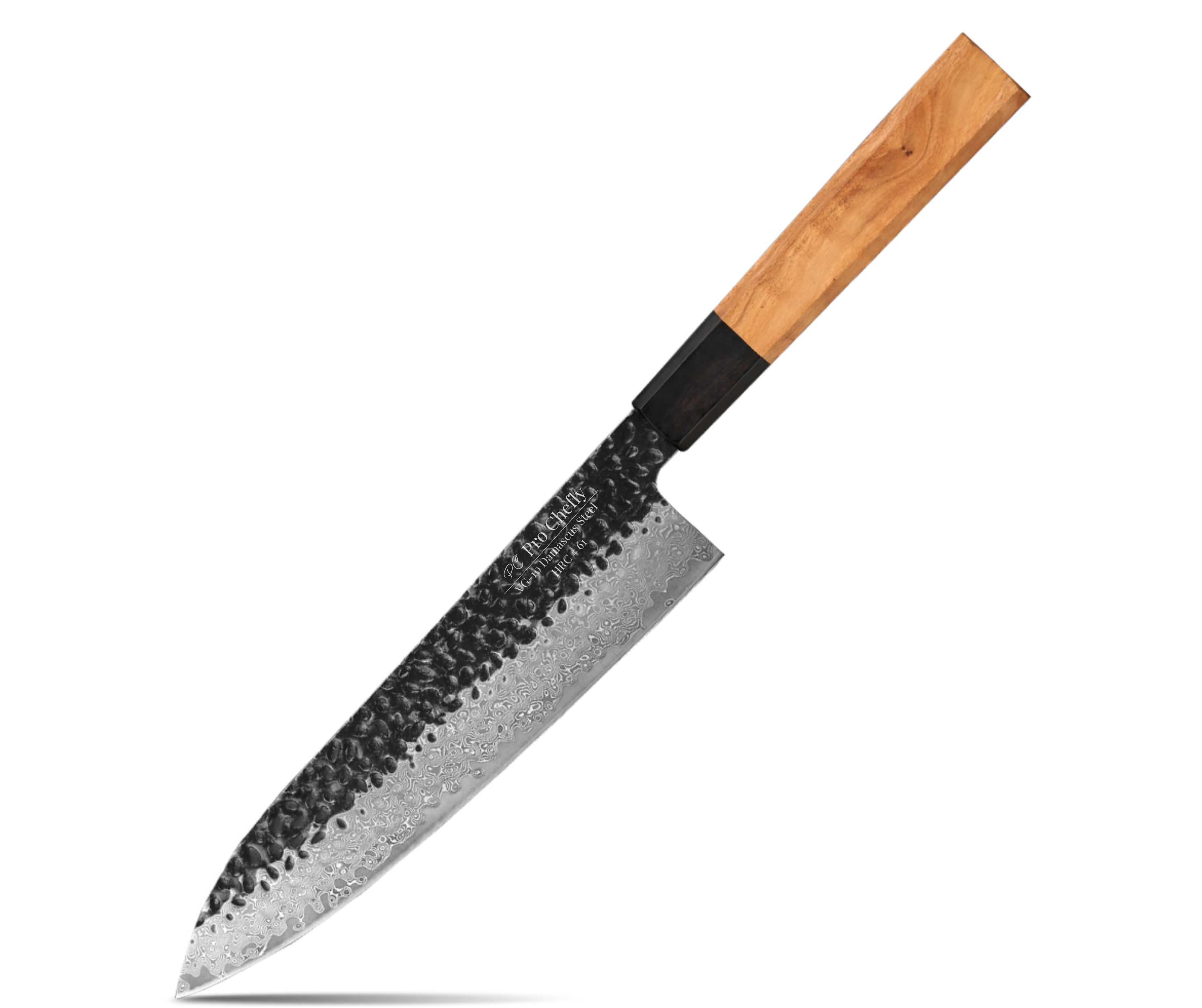
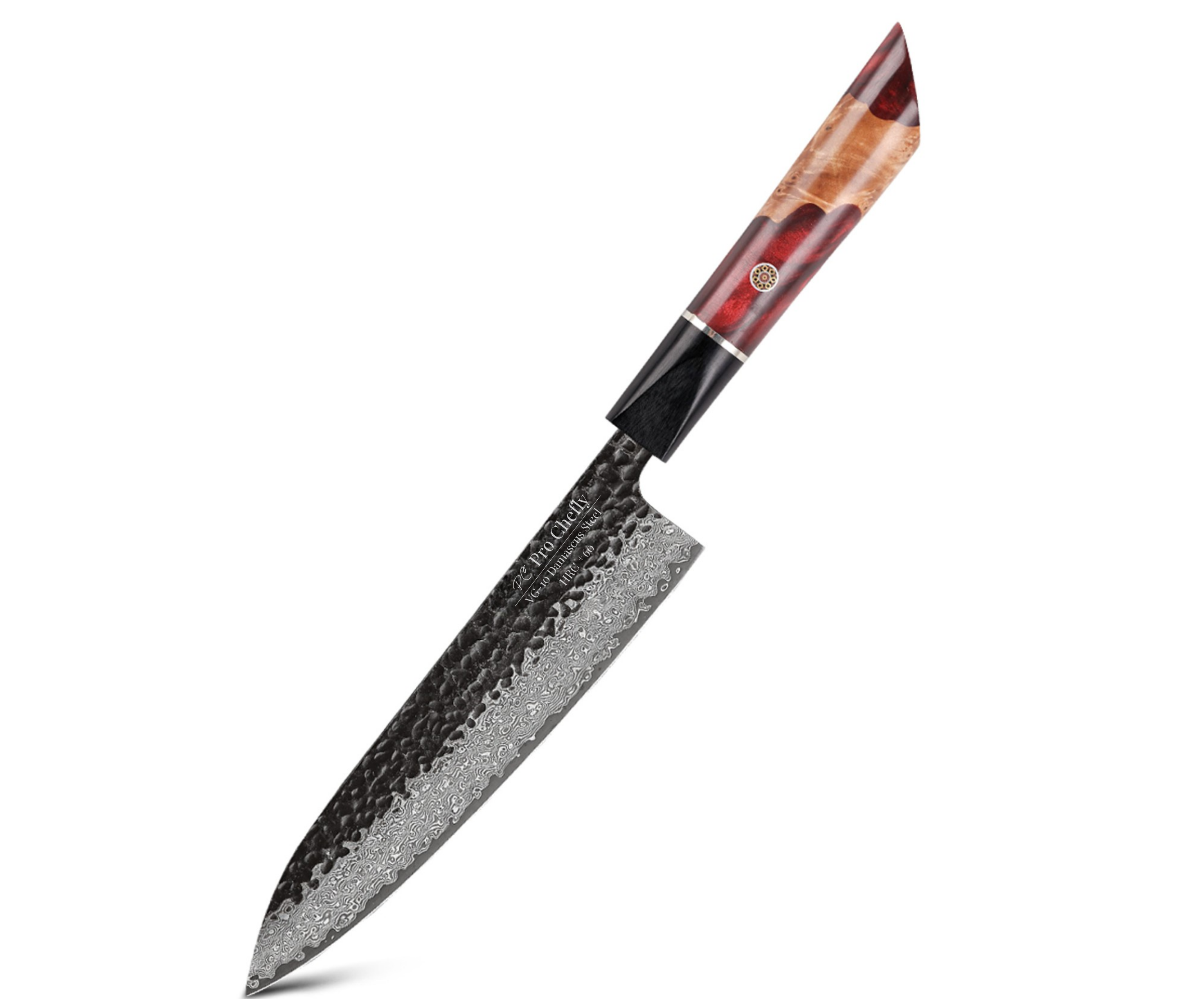
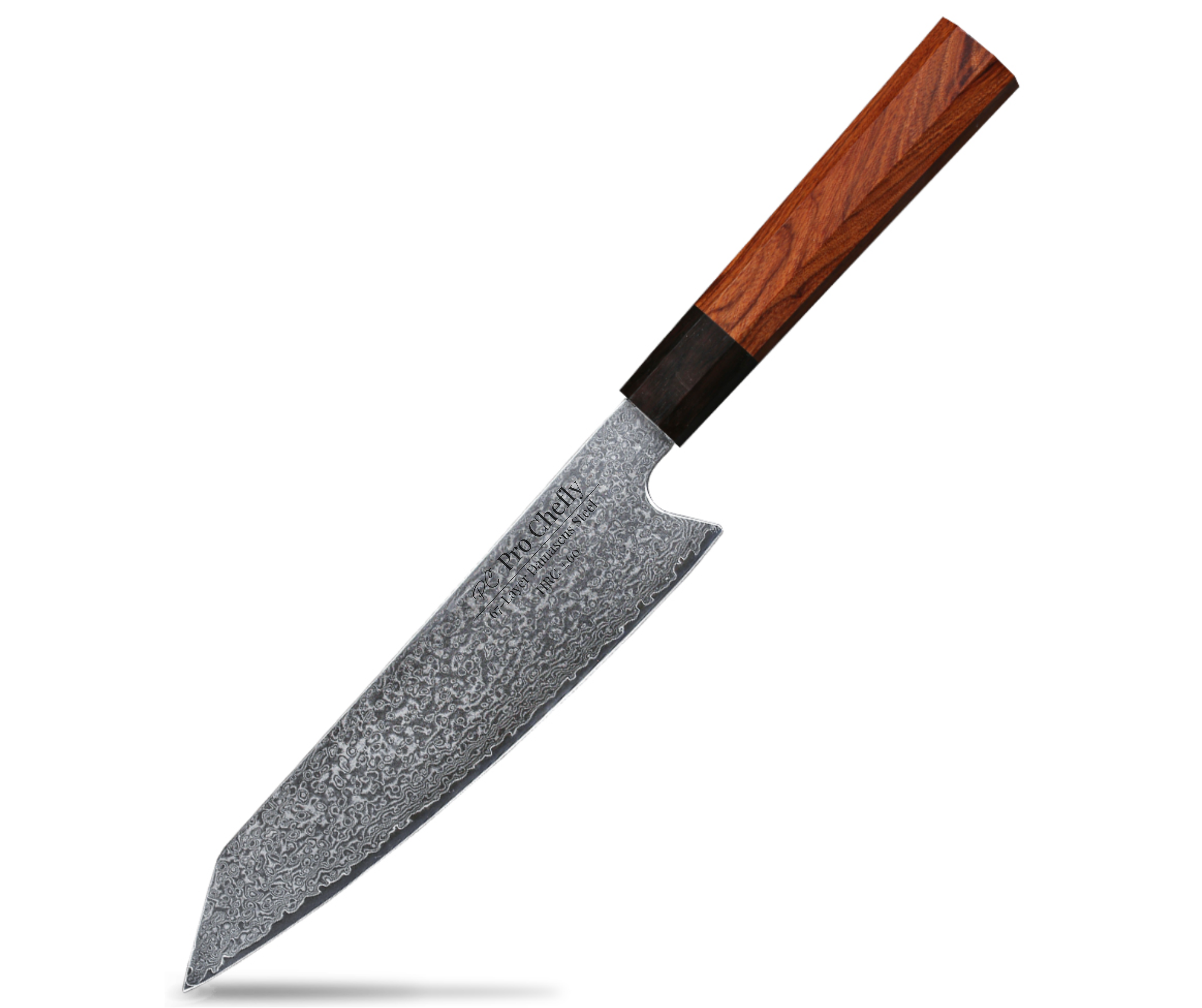
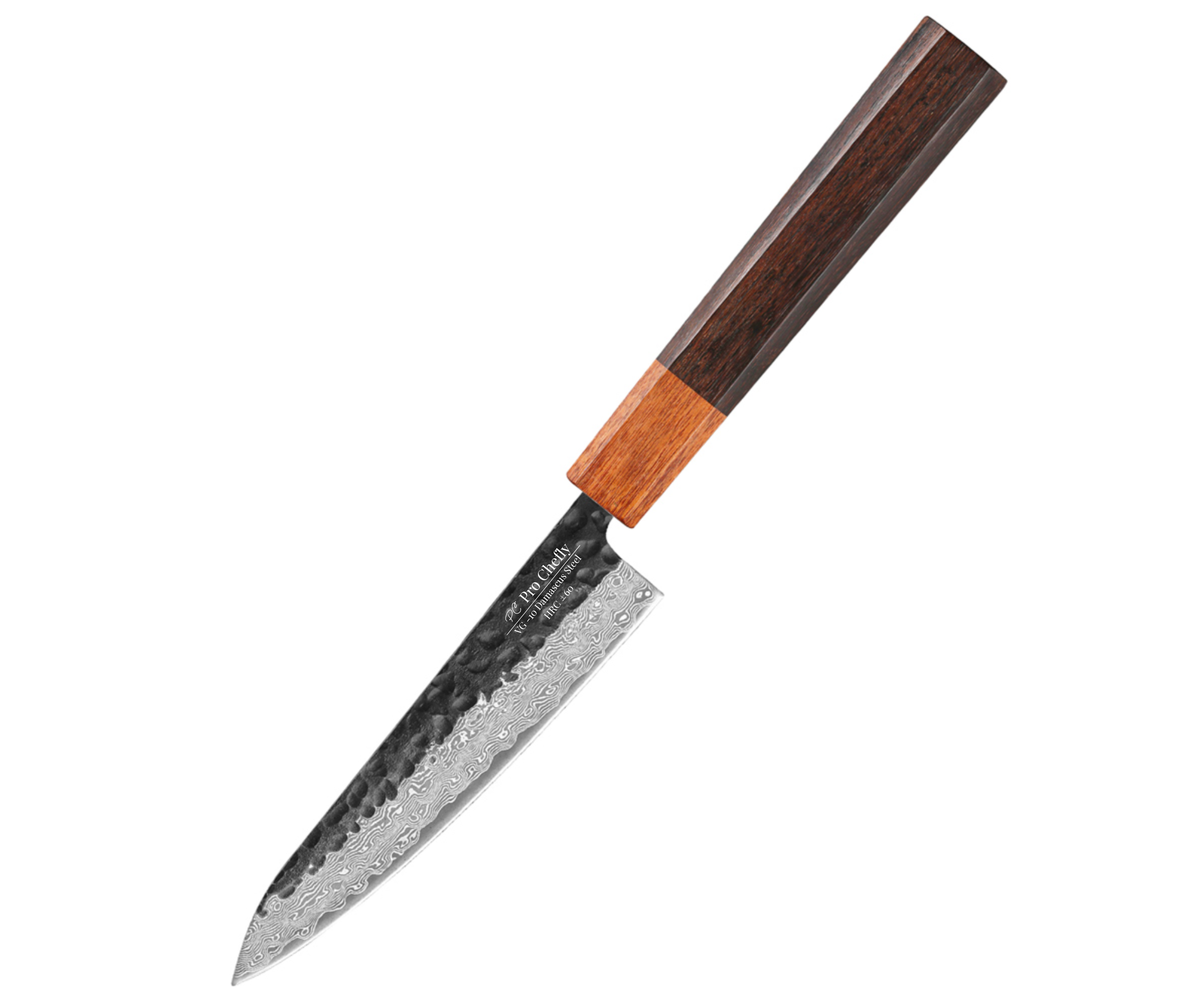
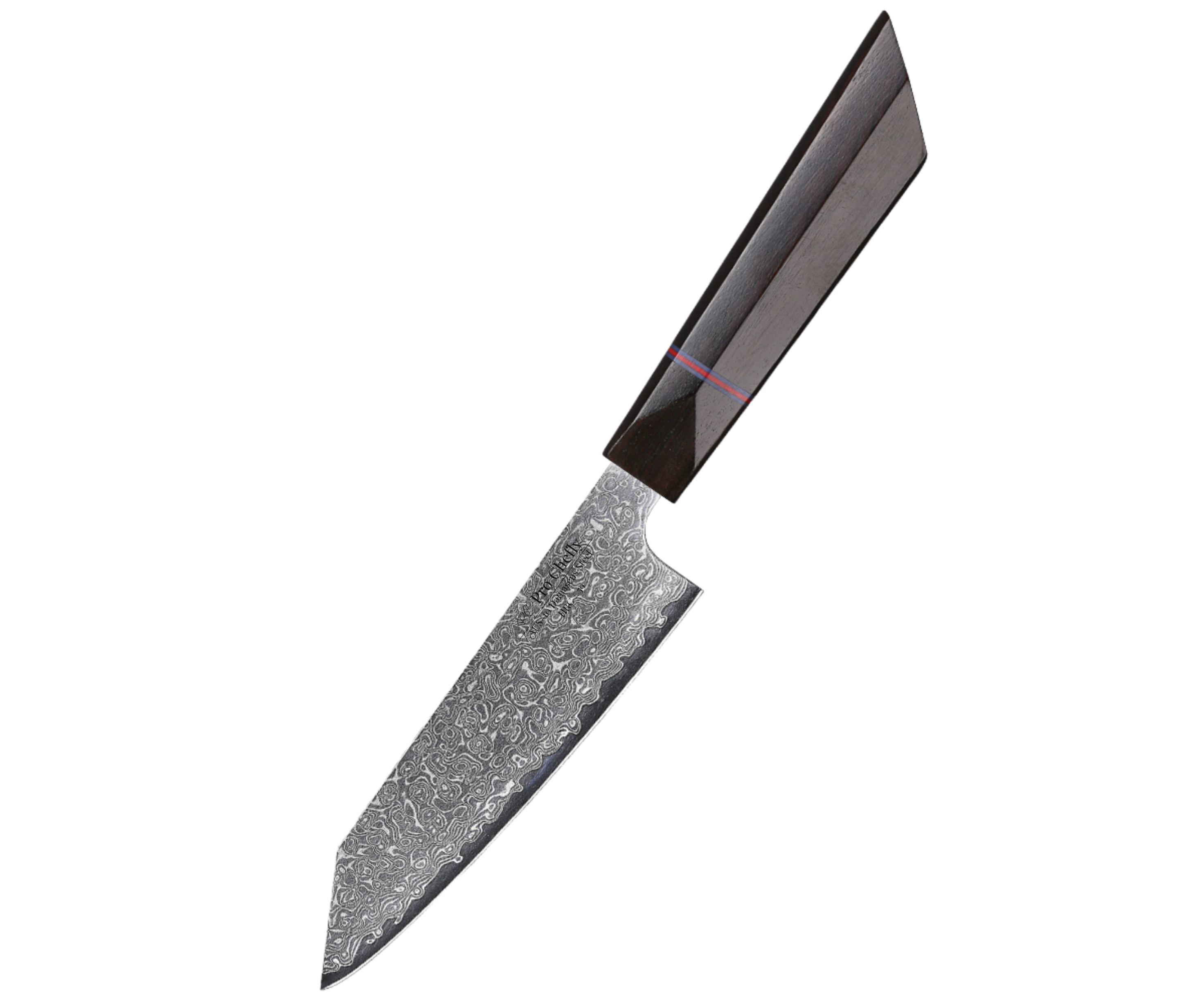
Shop the latest in Pro Chefly Damascus Knives






Chef's Notes
Stay up to date with the latest kitchen stories and recipes

- March 25, 2026
Dear Chefs, this is one of those dishes that feels like it belongs next to the ocean, even if you’re...

- March 23, 2026
Dear Chefs, this is the kind of spring dish that wakes up your entire kitchen the moment it hits the...

- March 19, 2026
Dear Chefs, some dinners don’t whisper, they walk into the kitchen with confidence and a little swagger. Surf and Turf...

- March 17, 2026
Dear Chefs, there’s something satisfying about a dish that feels wholesome, bright, and quietly comforting all at the same time....

- March 13, 2026
Dear Chefs, there is something about cooking whole fish that feels both elegant and surprisingly simple once you understand the...

- March 11, 2026
Dear Chefs, spring cooking always pulls me toward dishes that feel light, bright, and quietly luxurious without trying too hard....
- Choosing a selection results in a full page refresh.
- Opens in a new window.