

Chef’s Overview
Dear Chefs, ratatouille is what happens when peak summer produce stops being a pile of ingredients and turns into a full-blown celebration. This Provençal vegetable stew leans entirely on the eggplant, zucchini, peppers, and tomatoes flooding every market stand in July, so the fresher your haul, the better your pot. At Pro Chefly we treat ratatouille as a knife lover’s dream, because every glossy vegetable asks for clean, confident cuts that cook evenly and hold their shape. Done right, it lands somewhere between a rustic side and a satisfying vegetarian main, equally at home next to grilled fish or spooned over a thick slice of toast. Get the prep tight and the rest is just patience, good olive oil, and the smell of summer filling your kitchen.

A Provençal Stew That Tastes Like a July Market
The first ratatouille that ever stopped us in our tracks was not in a white-tablecloth restaurant but at a tiny roadside kitchen in the south of France, where the cook refused to rush a single step. She salted her eggplant, seared each vegetable on its own, and only married them at the very end, and that patience turned out to be the whole secret. Back in the early days of Pro Chefly, we tried to shortcut the process by dumping everything into one pot at once, and we ended up with a sad, watery mush that tasted faintly of regret. Ratatouille rewards the cook who treats each vegetable as its own character, and it quietly punishes anyone in a hurry. Once we started treating our cutting board as the most important station in the kitchen, the entire dish transformed from a chore into a summer ritual.
Ingredients You’ll Need
Ratatouille is generous and forgiving, so treat these amounts as a friendly guide rather than a strict rulebook. What matters most is that your vegetables are ripe, firm, and cut to a similar size so they cook in harmony instead of chaos. We like to split everything into the vegetables that get seared and the base that ties them together, which keeps the flow calm even when the board starts getting crowded. As written, this serves four to six as a side, or three to four hungry people as a main.
For the Summer Vegetables
- 1 medium eggplant, cut into 3/4-inch cubes
- 2 medium zucchini, cut into half-moons
- 1 yellow summer squash, cut into half-moons
- 1 red bell pepper, diced
- 1 yellow bell pepper, diced
- 1 large yellow onion, diced
- 6 tablespoons extra virgin olive oil, divided
For the Tomato Base and Finish
- 4 cloves garlic, thinly sliced
- 1 1/2 pounds ripe tomatoes, chopped (or one 28-oz can crushed tomatoes)
- 2 tablespoons tomato paste
- 1 teaspoon sea salt, plus more to taste
- 1/2 teaspoon freshly ground black pepper
- 1 sprig fresh thyme
- 1 small handful fresh basil, torn
- 1 tablespoon red wine vinegar, optional, to brighten
Step 1: Salt the Eggplant Before Anything Else
Start with the eggplant, because it needs a head start the other vegetables simply do not. Cut it into even three-quarter-inch cubes, toss with a teaspoon of salt in a colander, and let it drain for 20 to 30 minutes while you handle everything else. That resting time draws out excess moisture and bitterness so the eggplant sears into something golden instead of steaming into something soggy. This is also where a tall, flat-edged blade earns its keep, and our 7" Damascus Nakiri Knife glides straight down through the skin without dragging or crushing the soft interior. If you want your cubes museum-uniform, the same straight-down rhythm we broke down in How to Achieve Perfect Vegetable Julienne with a Nakiri Knife applies beautifully to a clean, even dice.
Step 2: Cut the Rest of Your Summer Vegetables
While the eggplant drains, move through the zucchini, yellow squash, peppers, and onion, keeping every piece close to the size of those eggplant cubes. Uniformity here is not about looking pretty for a photo, it is about every vegetable reaching tenderness at the same moment instead of some turning to jam while others stay stubbornly raw. The flat profile of a nakiri makes quick, clean work of half-moons and dice, and if you are wondering when this blade beats your everyday chef knife, we settled that whole debate in When to Use a Nakiri Knife Instead of a Chef Knife. Keep each vegetable in its own little pile on the board, because in a moment we are going to cook them with a bit of separation and respect.
Step 3: Slice the Garlic and Build a Quick Tomato Base
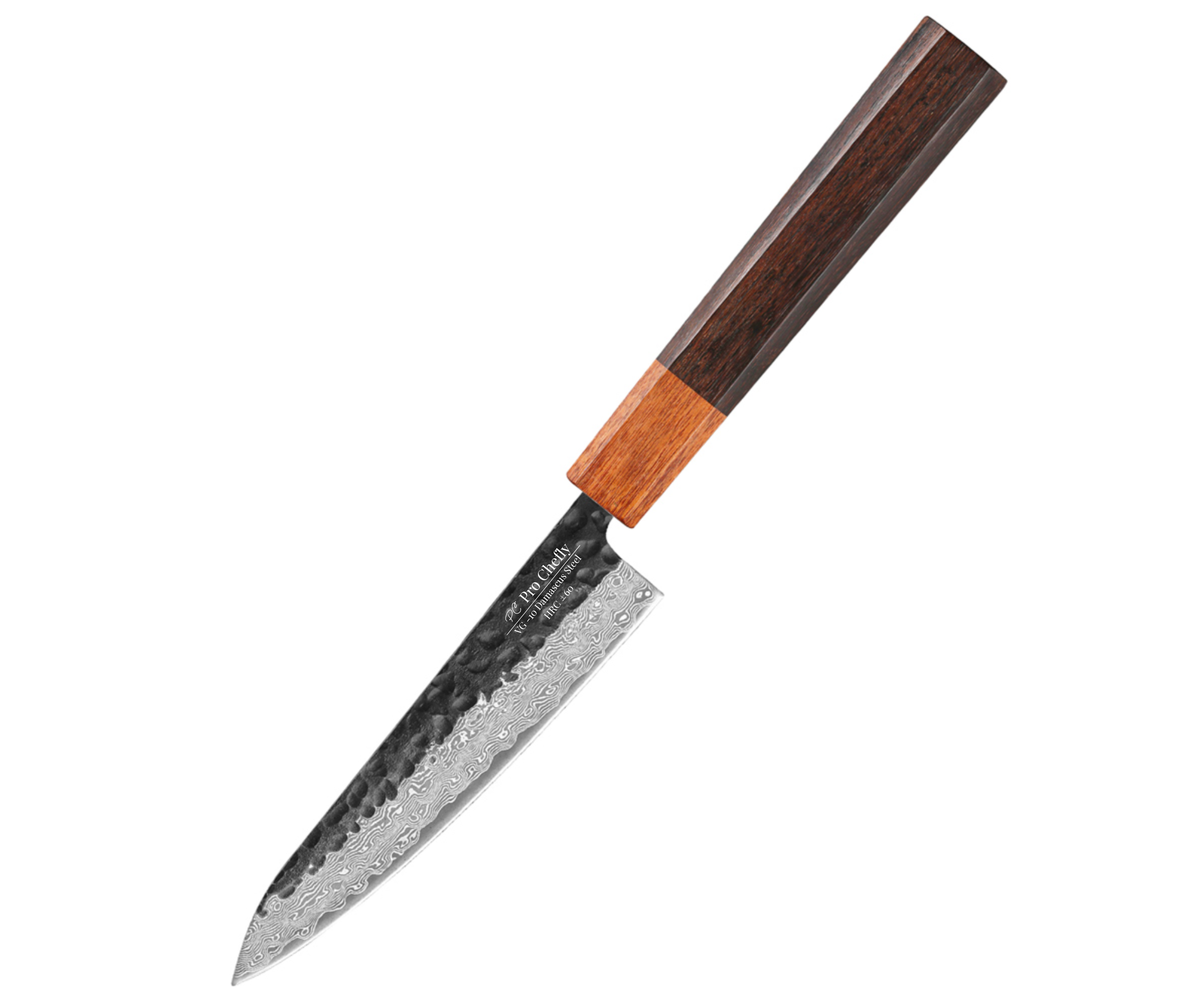
Now for the base that carries the whole dish on its shoulders. Thinly slice your garlic, and for delicate work like this we reach for the 5" Damascus Petty Knife, which has just enough length for control and just enough nimbleness for slivered garlic and torn herbs. Warm two tablespoons of olive oil in a wide pan over medium heat, add the garlic with a pinch of salt, and let it turn fragrant and pale gold without ever browning. Stir in the tomato paste to deepen the color, then add the chopped tomatoes and thyme sprig, and let it simmer gently for about 15 minutes until it thickens into something glossy and rich. If you are curious how a little knife like this pulls its weight far beyond garlic, we mapped out its range in What Are the Best Uses for a Petty Knife at Home.
Step 4: Sear the Vegetables in Separate Batches
This is the step that separates real ratatouille from a pot of vegetable soup. Pat the eggplant dry, then sear it in a couple tablespoons of hot olive oil over medium-high heat until the cubes are golden and tender, roughly 6 to 8 minutes, and set them aside. Do the same with the zucchini and squash, then the peppers and onion, adding a splash more oil between batches as the pan drinks it up. Crowding the pan traps steam and robs you of those caramelized edges, so give each batch room to breathe and take on real color.
Step 5: Bring Everything Together and Simmer
Once every vegetable has its color, fold them all back into the pan with the tomato base and stir gently so nothing breaks apart. Lower the heat, cover the pan partially, and let the whole thing simmer for 20 to 25 minutes so the flavors marry and the sauce hugs every single piece. Taste as you go and adjust the salt and pepper, and if your tomatoes came out a touch flat, a tablespoon of red wine vinegar wakes the entire pot right up. The vegetables should be tender and yielding but still recognizable, never collapsed into anonymous mush.
Step 6: Finish with Fresh Basil and Let It Rest
Pull the pan off the heat, tear in the fresh basil, and give everything one last gentle stir. Ratatouille is one of those rare dishes that tastes even better after a 15-minute rest, and honestly better still the next day once the flavors settle overnight in the fridge. Serve it warm, at room temperature, or cold straight from the container, alongside grilled fish, a runny egg, or a thick slab of toasted bread. However you choose to plate it, you are tasting the whole of summer in a single spoonful.
The Whole of Summer in One Pot
Ratatouille is living proof that patience and a sharp blade will always outrun fancy technique. Nothing about this dish is complicated, but everything about it rewards care, from the way you cut each vegetable to the restraint of searing them one honest batch at a time. When your market is overflowing and there is no possible way to eat all those peppers and zucchini before they turn, this is the pot that saves the week and somehow makes you look like you fussed for hours. Grab the ripest produce you can carry, slow down at the board, and let summer handle the rest.
Knife Collections
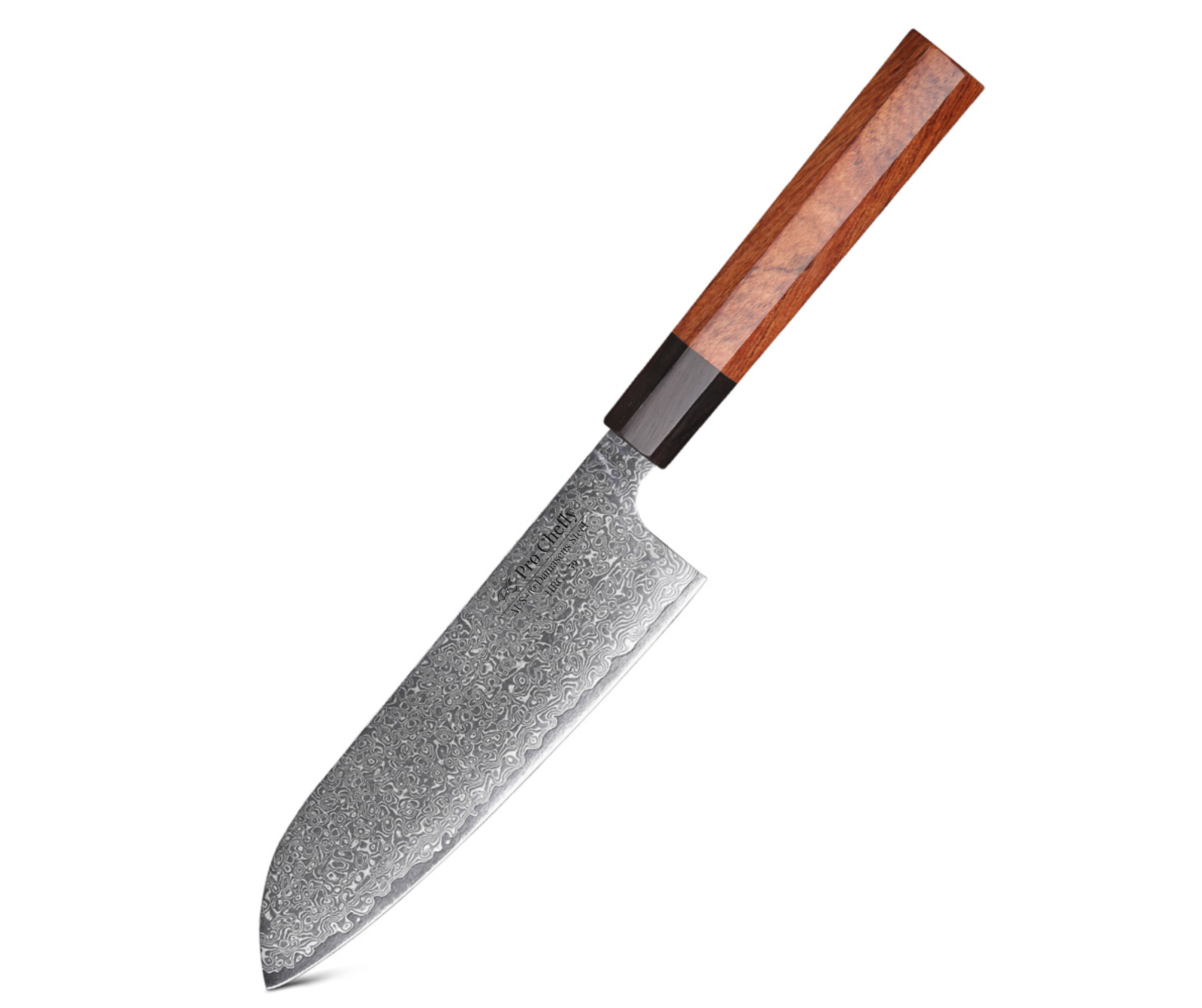
Shop the latest in Pro Chefly Damascus Knives







Chef's Notes
Stay up to date with the latest kitchen stories and recipes

- March 25, 2026
Dear Chefs, this is one of those dishes that feels like it belongs next to the ocean, even if you’re...

- March 23, 2026
Dear Chefs, this is the kind of spring dish that wakes up your entire kitchen the moment it hits the...

- March 19, 2026
Dear Chefs, some dinners don’t whisper, they walk into the kitchen with confidence and a little swagger. Surf and Turf...

- March 17, 2026
Dear Chefs, there’s something satisfying about a dish that feels wholesome, bright, and quietly comforting all at the same time....

- March 13, 2026
Dear Chefs, there is something about cooking whole fish that feels both elegant and surprisingly simple once you understand the...

- March 11, 2026
Dear Chefs, spring cooking always pulls me toward dishes that feel light, bright, and quietly luxurious without trying too hard....
- Choosing a selection results in a full page refresh.
- Opens in a new window.